
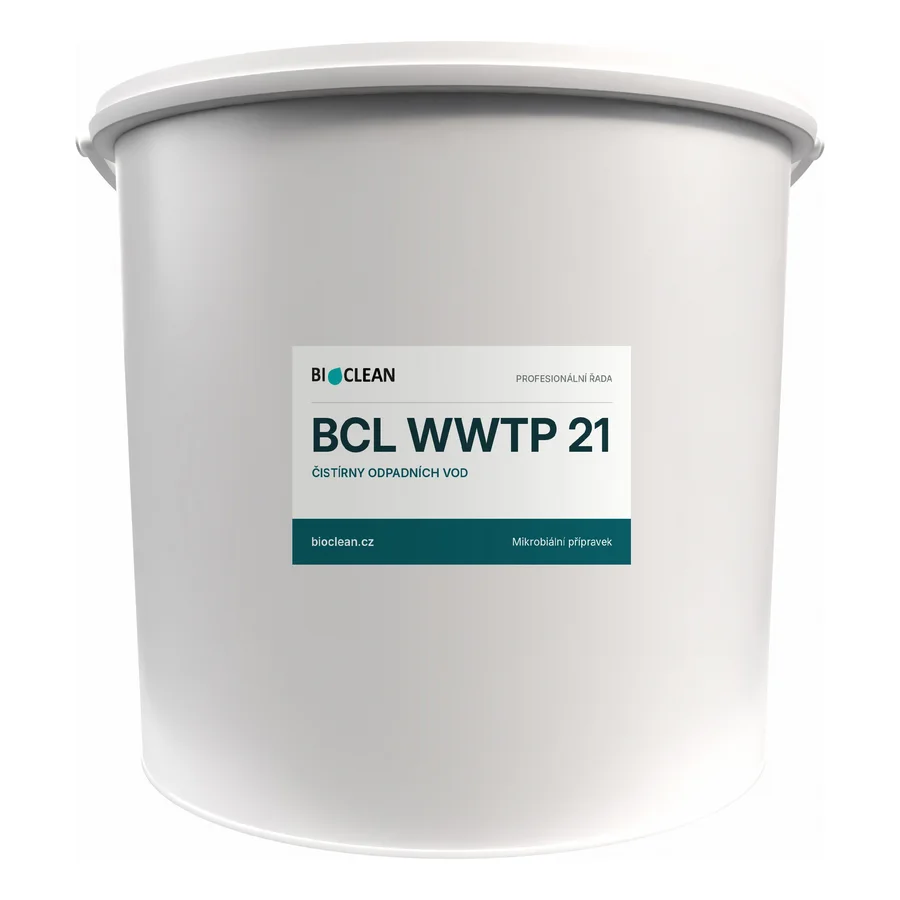
Illustrative packaging visual.
BCL WWTP 21
Surfactants in wastewater
Microbial blend to support the biological breakdown of surfactant loads in wastewater.
What it solves
Surfactants from detergents create large amounts of foam during aeration, reduce oxygen transfer into the water, and the foam overflows into the secondary clarifiers. In watercourses they damage fish gills.
Intended use
- Industrial WWTPs
When it is used
- Excessive foam
- Poor settling
- Recovery after shock loading
- Overloaded WWTP
- Poor effluent quality
- Sludge bulking
- Re-seeding
- WWTP start-up
- Poor BOD/COD removal
- Reduced sludge production
Solves problems
Suitable technologies
Sectors
Dosage and implementation
We design the dosage for the specific facility. It usually starts with initial seeding followed by regular maintenance doses. For a proposal we need to know the type of technology, volume or flow and the main problem.
- You describe the facility and the problem you are dealing with.
- We propose the product and the dosing regime.
- We deliver the product and advise you during implementation.
What to consider before use
- We will assess suitability and dosage for your specific facility.
We deliver this product to your country with a label in your language, also under your own brand. Packaging and delivery terms will be specified in our offer.
Related products.
BCL WWTP
Start-up and recovery of biological WWTPs
BCL WWTP 01
Nitrification support in municipal WWTPs
BCL WWTP 02
Sulphides and related odour in municipal wastewater
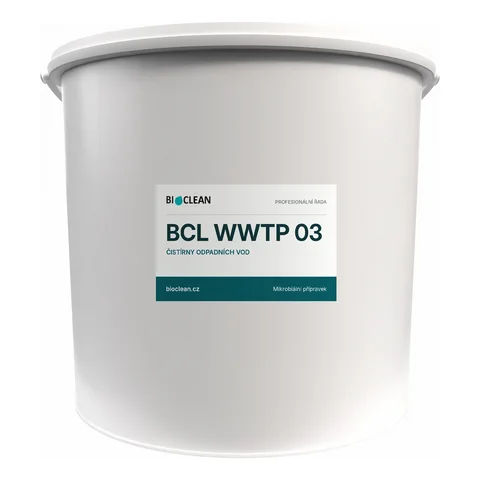
BCL WWTP 03
Fats in municipal pumping stations